ReadyPI
One API. 150+ models. Billed in your own currency.
- ROLE
- Product design, full-stack build, deployment
- STACK
- Next.js · Node.js · TypeScript · REST APIs
- LIVE AT
- readypi.online
// THE PROBLEM
Shipping an AI feature usually means integrating each provider separately. Every vendor has its own SDK, its own auth, its own request and response shape, and its own billing account. Swapping models — or hedging against one provider going down — means rewriting integration code rather than changing a config value.
The billing side is worse outside the United States. Most providers price and charge in USD and expect an international card, which adds currency conversion, card-decline friction and a reconciliation problem for teams that budget in their local currency.
// THE SYSTEM
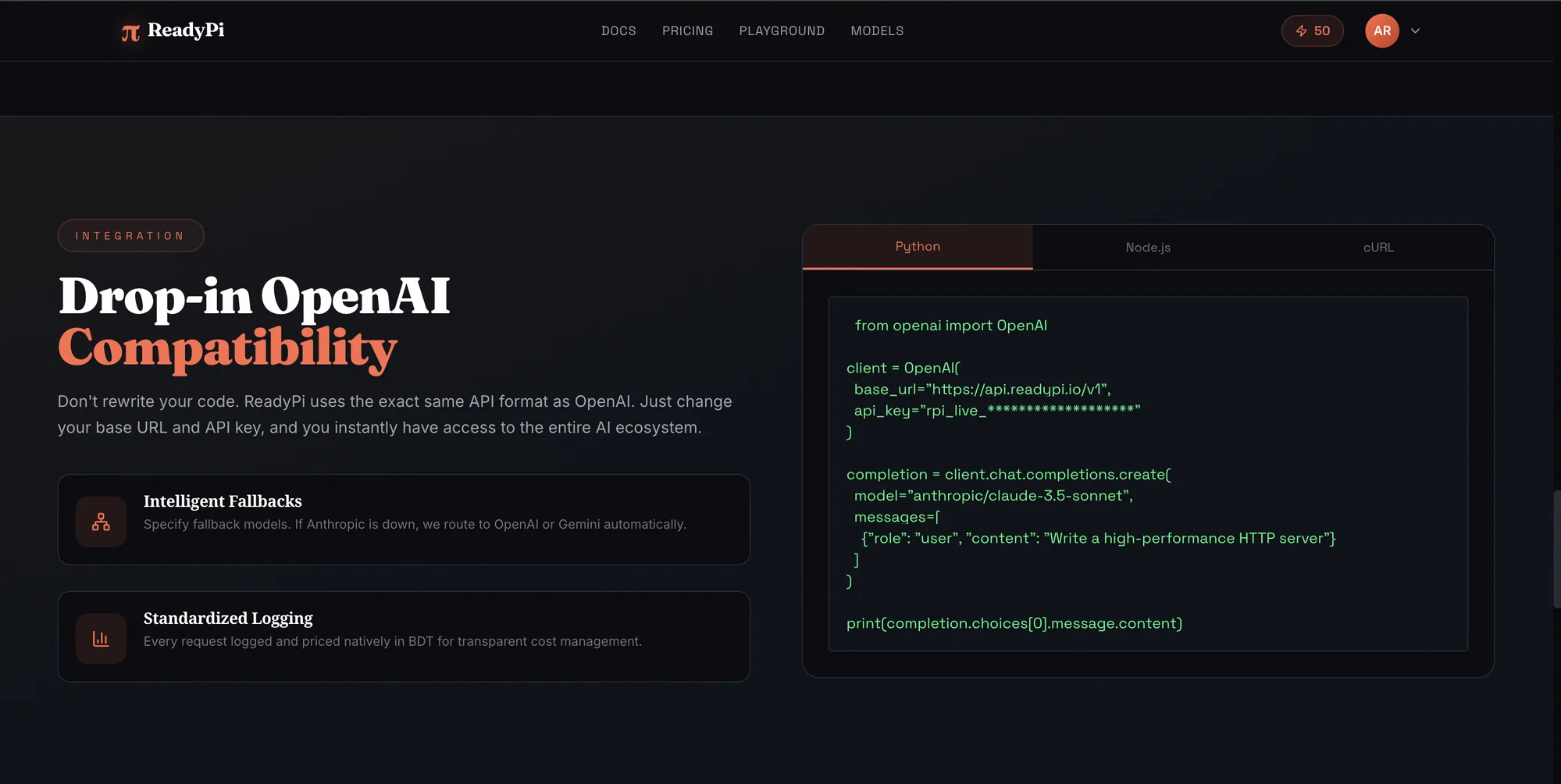
ReadyPI exposes a single REST surface that matches the OpenAI API format exactly. Existing SDK code migrates by changing the base URL and the key — no new client library, no rewritten call sites.
Behind that surface, a routing layer normalises requests across more than 150 models from providers including OpenAI, Anthropic, Google, Meta and DeepSeek, so model choice becomes a string parameter instead of an integration project.
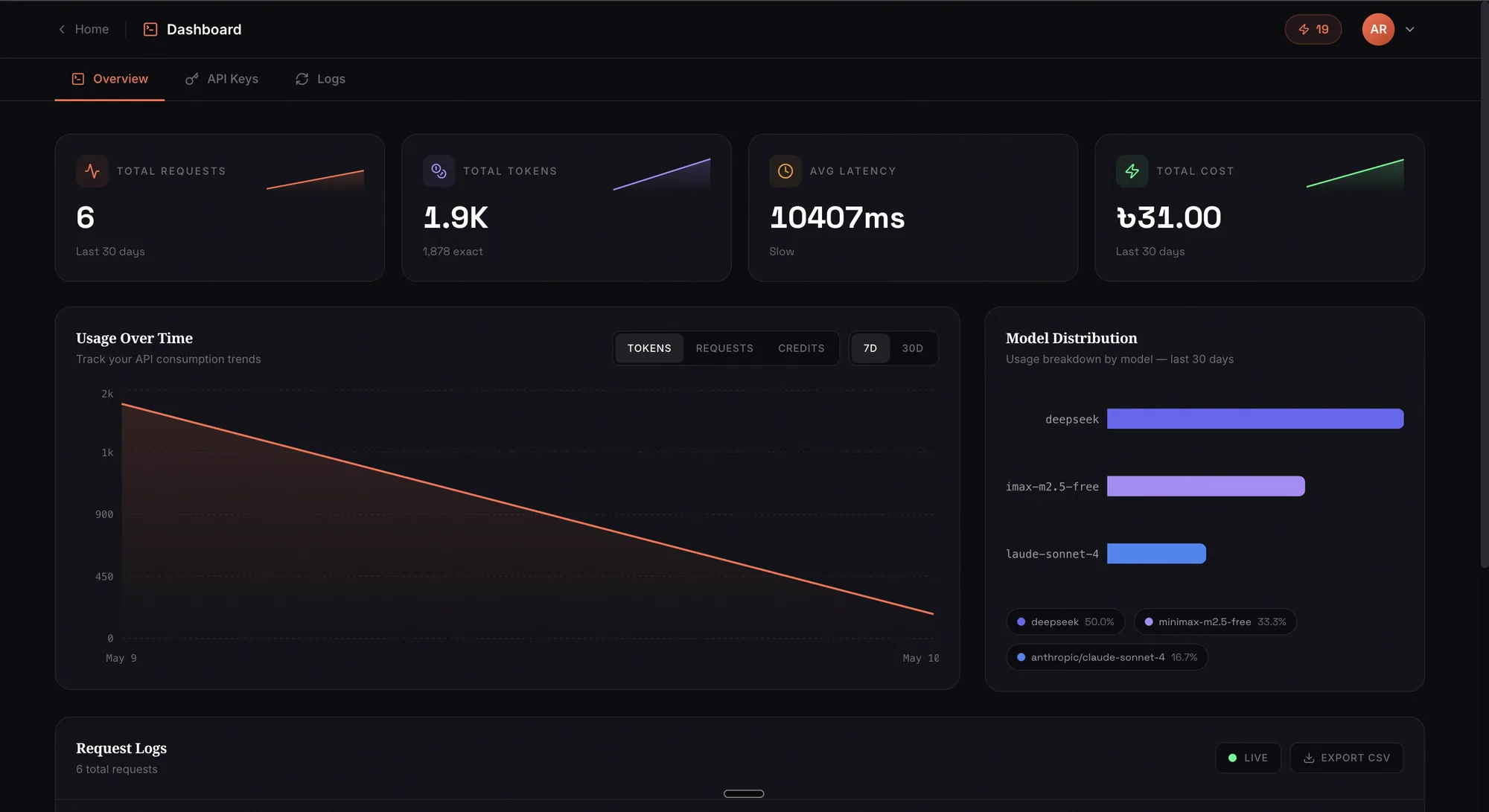
A usage dashboard reports requests, tokens, latency and cost in real time, so spend is attributable per key and per model rather than discovered at the end of a billing cycle.
Billing is denominated in the customer’s local currency, removing the international-card requirement that blocks a lot of teams from using frontier models at all.
// WHAT SHIPPED
- Live and serving traffic at readypi.online.
- Drop-in OpenAI compatibility means an existing integration migrates in a two-line change.
- Model selection, failover and cost tracking became configuration rather than engineering work.

Building something like this?
Tell me the shape of the project and I'll come back with how I'd approach it.
START A PROJECT